Suffolk County Water Heating Specialists

Water Heater Repair in Islip, NY

When you lose domestic hot water, hear strange rumbling from your storage tank, or discover standing water in your utility room, our technicians deliver prompt, methodical water heater repair in Islip, NY. We troubleshoot burners, thermostats, heating elements, and safety valves to restore dependable hot water without unnecessary sales pressure.

Coverage Area Islip & South Shore
System Focus Gas, Electric & Tankless
Primary Action Direct Telephone Dispatch
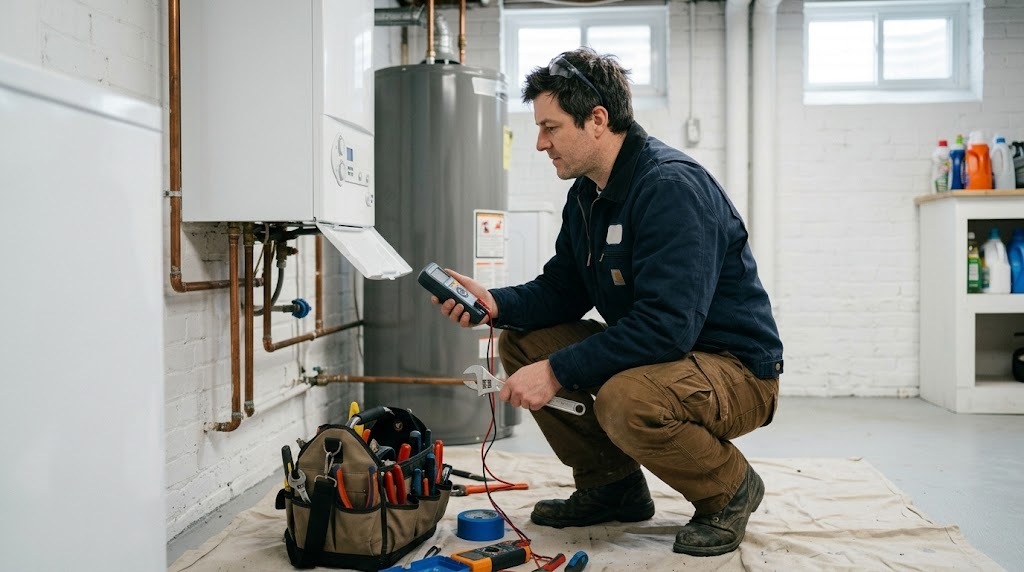
Plumbing technician testing a residential water heating system in a South Shore basement utility space
Accurate Diagnostics
Targeting root component faults before replacing entire tanks.
Local Systems Knowledge

Reliable Hot Water for Islip Residences

Addressing daily household water heating challenges across coastal and suburban Suffolk County.

Hot water is essential to modern household hygiene, cooking, laundry, and daily comfort. When a water heater begins malfunctioning in an Islip home, the disruption is immediate. Across the South Shore of Long Island, residential properties encompass a wide range of architectures—from mid-century ranches in central neighborhoods to historic colonials near the Great South Bay and multi-family residential units near regional transit hubs. Each housing layout presents distinct demands on water heating equipment.

Whether your home utilizes an atmospheric vented natural gas tank, an electric storage unit, or an indirect domestic coil tied into a central boiler, water heaters operate continuously under thermal stress and hydraulic pressure. When you require hot water heater repair Islip residents can rely on, our approach focuses on diagnosing specific component failures rather than recommending automatic equipment replacement.

Diagnostic Indicators

Common Warning Signs of Water Heater Failure

Catching subtle symptoms early prevents catastrophic basement flooding and prolonged cold-water outages.

Inconsistent Temperatures

Water turning lukewarm mid-shower or fluctuating sharply between hot and cold points to failed thermostat calibration, a cracked internal dip tube, or failing electric heating elements.

Complete Loss of Hot Water

When faucets produce only ice-cold water, emergency no hot water repair Islip calls often stem from blown high-limit reset switches, extinguished standing pilots, or defective gas thermopiles.

Rumbling & Popping Sounds

Kettling sounds resemble boiling popcorn inside the tank. This noise occurs when mineral sediment settles across the base, trapping water pockets beneath scale that violently vaporize into steam.

Discolored or Rusty Water

Reddish, tinted, or metallic-tasting water flowing exclusively from hot taps indicates that the sacrificial magnesium anode rod has depleted, allowing internal tank steel to undergo oxidation.

Active Moisture & Pooling

If your water heater leaking Islip situation involves moisture pooling beneath the jacket, immediate inspection is critical to differentiate between a weeping brass fitting and a cracked tank shell.

Repeated Burner Lockouts

Gas water heaters that ignite briefly and then cycle off repeatedly suffer from clogged flame arrestor screens, dirty flame sensors, thermocouple degradation, or defective draft hoods.

Experiencing Sudden Loss of Hot Water in Islip?

Call our direct line to discuss your water heater symptoms with an experienced local plumbing professional.

Call (315) 202-8009
Technical Breakdown

Underlying Causes of System Failures

Understanding why components wear down helps homeowners make informed maintenance decisions.

Mineral Scale Accumulation

Long Island aquifer water contains naturally occurring dissolved calcium and magnesium. Over months of thermal cycling, these minerals precipitate out of solution, coating heating elements and tank floors with rock-hard insulation that stresses metal welds.

Thermocouple & Sensor Wear

Standing pilot gas systems utilize a millivolt thermocouple to verify flame presence before opening the main burner gas valve. Oxidation or carbon buildup on this tip prevents adequate electrical current, triggering automatic gas shutoffs.

Thermal Expansion Stress

Closed residential plumbing systems equipped with backflow preventers or check valves experience hydraulic pressure surges during heating cycles. Without a properly pressurized expansion tank, the temperature and pressure (T&P) valve will continually weep.

Thermostat Calibration Drift

Mechanical dial thermostats on gas control valves and bi-metallic contact thermostats on electric tanks can drift out of calibration over time, leading to dangerously scalding water or tepid supplies that run out after five minutes.

System Types

Gas vs. Electric Water Heater Diagnosis

Different energy sources require specific testing procedures and safety protocols.

Gas Water Heater Repair

Natural gas units rely on atmospheric or powered draft venting, gas control valves, pilot assemblies, and sealed combustion chambers. Methodical gas water heater repair Islip diagnostics include testing gas supply pressure, verifying chimney draft, inspecting the burner orifice for lint obstruction, and testing the emergency high-temperature cutoff. Combustion efficiency and ventilation safety remain our paramount technical priorities during every gas call.

Electric Water Heater Repair

Electric storage water heaters operate on dedicated 240-volt electrical circuits utilizing upper and lower resistive immersion elements managed by sequential thermostats. Comprehensive electric water heater repair Islip troubleshooting involves isolating power, measuring resistance (ohms) across each element to identify open circuits, verifying voltage continuity through thermostats, and resetting tripped high-limit switches caused by scale buildup.

Hydronic Integration

Indirect Tanks & Domestic Boiler Coils

Many properties throughout Islip and nearby South Shore communities utilize hydronic heating boilers to provide both space heating and domestic hot water. These systems frequently feature an indirect-fired water heater—a heavily insulated storage tank containing an internal heat exchanger coil piped directly to a dedicated boiler heating zone.

When hot water fails on an indirect system, the fault may not reside inside the water tank itself. Common causes include a failed zone circulator pump, an airbound heating loop, a malfunctioning zone valve, or an inoperative boiler aquastat. In older systems equipped with tankless internal boiler coils, heavy mineral fouling inside the narrow copper finned tubing often restricts water flow and reduces heat transfer. In such situations, coordinated evaluation of both the domestic plumbing and hydronic heating controls is required.

Decision Framework

Repair vs. Replacement Considerations

Evaluating age, component costs, and tank structural condition before moving forward.

Evaluation Factor Candidate for Targeted Repair Candidate for Full Replacement
Equipment Age Unit is under 8 to 10 years old with documented service history. Unit exceeds 10 to 12 years, approaching end of design life.
Tank Shell Condition Outer jacket and base pan are dry; zero corrosion on weld seams. Rust streaks visible beneath jacket; moisture weeping from tank steel.
Failed Component Thermostat, thermocouple, heating element, brass drain, or T&P valve. Ruptured internal glass lining or corroded bottom head weld.
Repair Frequency First isolated mechanical issue experienced in recent years. Multiple recurring repairs over the past 12 to 18 months.
Efficiency & Energy Operating within acceptable standby loss guidelines. Severely scaled tank drawing excessive power or gas fuel.

If your assessment indicates that ongoing repairs are no longer practical, explore our detailed Water Heater Replacement options, or evaluate energy-efficient continuous flow systems on our Tankless Water Heater Installation resource.

Professional Protocol

What to Expect During a Service Visit

Transparent, step-by-step diagnostic workflow tailored to your home's setup.

1

Intake & History

We discuss your reported symptoms over the phone, verify the fuel type, note equipment age, and review recent maintenance history before dispatch.

2

On-Site Diagnosis

The technician conducts physical pressure tests, electrical multimeter checks on elements, gas pressure readings, and venting draft inspections.

3

Repair Recommendations

We explain the exact mechanical failure, discuss the feasibility of repair versus replacement, and outline the necessary steps before starting work.

4

Verification & Safety

Following component replacement, we fire the appliance, calibrate operating temperature, test safety shutoffs, and check for hydraulic or gas leaks.

Regional Environmental Context

South Shore Coastal Influences on Plumbing Equipment

Islip's geographic location along the Great South Bay subjects residential mechanical equipment to distinct environmental stressors. High ambient coastal humidity and maritime air can accelerate surface oxidation on galvanized venting pipes, water heater draft hoods, and electrical conduit connectors, particularly in unconditioned crawlspaces or damp utility basements.

Furthermore, southern Suffolk County experiences seasonal fluctuations in groundwater levels, especially following intense coastal rainstorms. Basements prone to dampness or moisture seepage create an aggressive environment for bottom-mounted water heater burners and pilot assemblies. Regular visual checks of your appliance base, proper atmospheric ventilation, and maintaining effective basement flood controls—such as those detailed on our Sump Pump & Flood Protection page—help protect water heating units from premature degradation.

Homeowner Guidance

Preventative Maintenance Checklist

Practical measures homeowners can monitor to protect their water heating investment.

Annual Tank Flushing

Flushing accumulated mineral sediment out of the bottom drain valve once a year prevents scale buildup from insulating the tank floor, preserving burner efficiency.

Anode Rod Inspection

Have the sacrificial anode rod checked every 3 to 4 years. Replacing this inexpensive magnesium or aluminum rod before it disintegrates prevents tank wall rust.

T&P Valve Testing

Periodically lift the test lever on the temperature and pressure relief valve to ensure the internal spring reseats cleanly and water discharges through the blow-off pipe without jamming.

Emergency Preparedness

Urgent Situations: Safety Protocols

Suspected Gas Odor or Carbon Monoxide Alert

If you smell the sulfurous "rotten egg" odor of natural gas near your water heater or your carbon monoxide alarm sounds, evacuate all occupants from the building immediately. Do not flip electrical light switches, use landline phones, or light matches inside. From a safe distance outside, call National Grid (or your local gas utility) or 911 before contacting a plumbing contractor.

Major Water Leak or Ruptured Tank

If water is spraying or rapidly flooding around your water heater, locate the cold water shutoff valve directly above the tank (or the main household water shutoff) and turn it clockwise until fully closed. On electric units, switch off the dedicated circuit breaker at your main panel to prevent electrical shock.

Comprehensive Solutions

Related Plumbing Services in Islip

Beyond water heater repairs, we maintain, repair, and protect residential plumbing systems throughout Suffolk County.

Water Heater Replacement

When repairing an aging or ruptured tank is no longer viable, we provide complete removal and professional installation of correctly sized modern storage water heaters.

Explore Replacement Services

Tankless Water Heaters

Upgrade to compact, on-demand water heating systems that deliver continuous hot water, require less mechanical space, and benefit from routine descaling.

View Tankless Solutions

Sump Pump & Flood Protection

Protect your mechanical room and basement from high south-shore water tables with submersible sump pump installations, check valves, and battery backups.

Learn About Flood Control

Boiler Repair

From troubleshooting no-heat calls on hydronic systems to maintaining steam radiator pressure controls and circulating pumps, we keep home heating reliable.

Review Boiler Diagnostics

Leak Detection

Pinpoint hidden water leaks concealed behind finished drywall, under subfloors, or inside multi-family ceiling cavities without unnecessary structural damage.

Discover Leak Detection

Drain Cleaning

Clear sluggish sink drains, clogged shower traps, and severe main sewer line backups utilizing professional mechanical augering and diagnostic camera evaluation.

Clear Drain Blockages

Pipe Leak Repair

Resolve pinhole copper leaks, corroded galvanized lines, failed PEX fittings, and frozen burst pipes before structural water damage compromises your living areas.

Inspect Pipe Repairs

Toilet & Faucet Repair

Eliminate wasteful phantom running toilets, dripping shower valves, and leaking sink faucets to protect cabinetry and conserve domestic water supplies.

Fix Fixture Leaks
Regional Service Range

Serving Islip and Surrounding Towns

Delivering responsive plumbing diagnostics across southern and central Suffolk County.

Our field service territory encompasses the entire Town of Islip and neighboring South Shore communities. Whether you need reliable water heater repair near Bay Shore for a historic residence, water heater repair near Brentwood for a bustling single-family property, or prompt assistance with water heater repair near Central Islip, our technicians travel directly to your location with diagnostic instrumentation and common repair components.

We also provide services to nearby hamlets including East Islip, Sayville, Bohemia, Ronkonkoma, and West Islip. Visit our comprehensive Service Areas Directory for full neighborhood service details across Suffolk County.

Common Questions

Frequently Asked Questions: Water Heater Repair

Why is my water heater producing lukewarm water instead of hot water?

Lukewarm water is commonly caused by heavy mineral sediment buildup insulating the bottom heating element or burner, a failing upper or lower thermostat on electric models, a broken dip tube allowing incoming cold water to mix with exiting hot water, or a faulty gas control valve.

Is it safe to keep running a water heater that has water pooling underneath it?

No. Visible pooling water indicates a leak from either plumbing connections, the temperature and pressure relief valve, or an internal tank rupture. Leaks near electrical elements or gas burners create serious hazards. Turn off the water supply valve and contact a technician immediately.

How do coastal south-shore conditions in Islip affect water heater lifespan?

Homes in south-shore Suffolk County near the Great South Bay often experience higher atmospheric humidity, seasonal groundwater variations, and dissolved mineral content that accelerate galvanic corrosion on tank fittings, exhaust venting, and sacrificial anode rods.

When should an older water heater be repaired rather than replaced?

If the water heater is under 8 years old, the internal tank shell is solid with no active corrosion, and the issue is restricted to a replaceable part like a thermocouple, heating element, or relief valve, a professional repair is typically the most practical solution.

Need Immediate Water Heater Diagnostics in Islip?

Speak directly with our local plumbing specialists to discuss your water heating issue and arrange prompt service.

(315) 202-8009
Call (315) 202-8009 Now
Call (315) 202-8009